


How changes in tire design affect laboratory test methods and equipment suitability
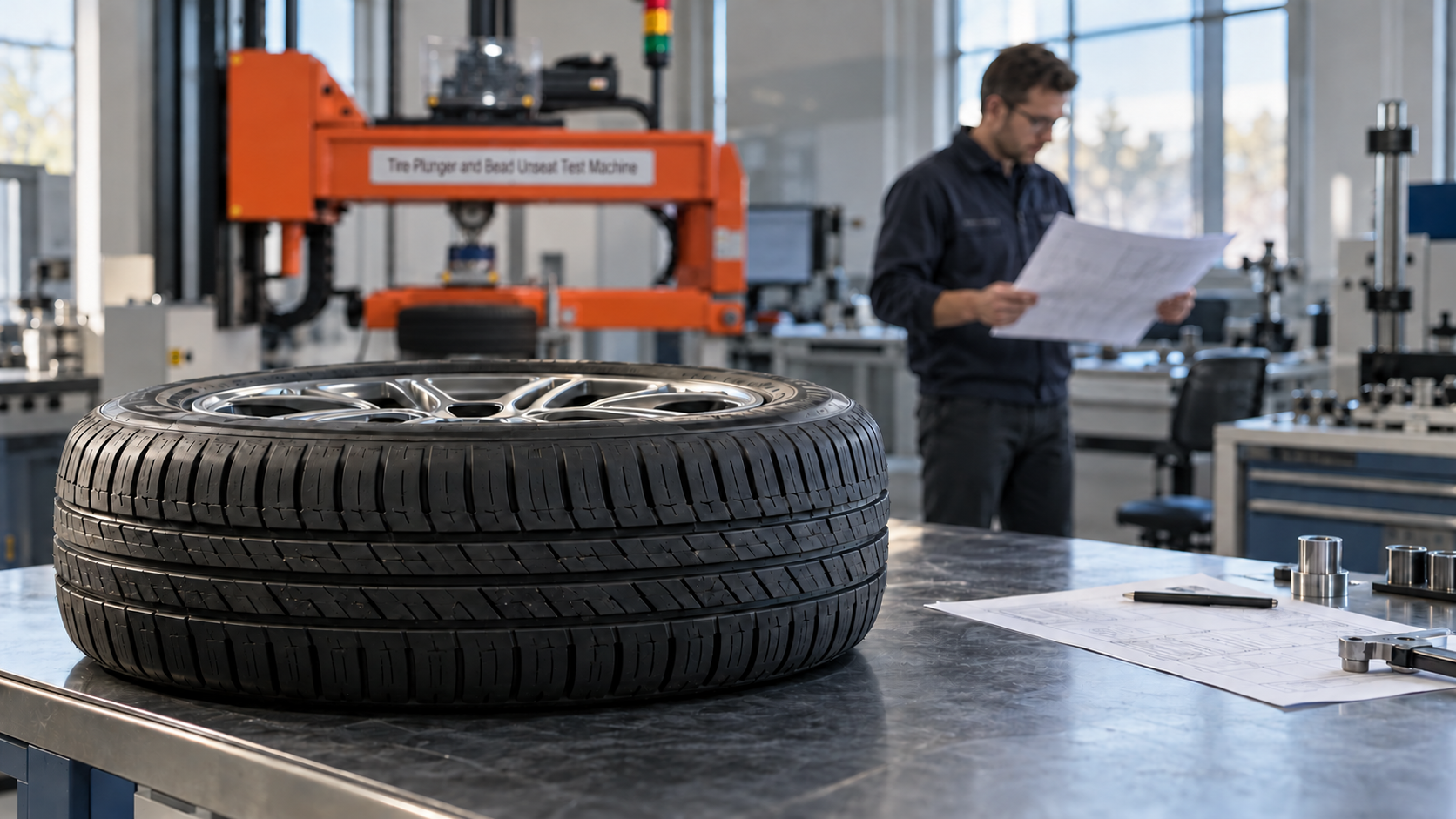
The United States is considering a review of selected tire strength, bead unseating resistance and endurance test requirements. For tire laboratories, the question is not simply whether a tire fits on a machine: the plunger, bead unseating block, rim and loading conditions must work together for the chosen method, and the result must be interpreted in context.
01What the regulatory review covers
On October 27, 2026, the U.S. National Highway Traffic Safety Administration (NHTSA) published a notice of intent to establish a negotiated rulemaking advisory committee for tire safety. The proposed committee would bring interested parties together to develop recommendations on tire safety requirements and test procedures.[1]
Its proposed discussion topics include tire strength, bead unseating resistance and chunking in endurance tests, as well as non-pneumatic tires and tire markings. The relevant Federal Motor Vehicle Safety Standards (FMVSS) 109, 119 and 139 cover different tires and tests. For example, bead unseating resistance is addressed in FMVSS 109 S5.2 and FMVSS 139 S6.6, while FMVSS 119 includes strength and endurance requirements for tires within its scope.[6]
As of November 3, 2026, the notice is seeking comments on establishing the committee, its proposed scope and membership. The comment deadline is November 27, 2026. Any subsequent recommendations would still go through the rulemaking process. The notice itself does not bring new tire test requirements into force; currently applicable requirements remain in effect.
02Why tire design matters to test methods
A test method establishes conditions for the specimen, mounting, loading and evaluation. Those conditions must work together for a result to have a clear basis for interpretation.
Changes in tire design and size can create practical challenges. With low-profile tires, for example, section height, rim size and available clearance can influence how the plunger or bead unseating block contacts the tire.
NHTSA sought input on strength, bead unseating resistance and endurance tests in a 2019 advance notice of proposed rulemaking. The 2026 notice places these longstanding topics within the proposed committee’s scope.[2]
Three questions help assess a test method: Can the test be performed as specified? Are the results consistent, objective and reproducible? How do they relate to the tire safety performance being evaluated?
FOUR ELEMENTS OF A TEST
Consistent measurements provide a foundation for reliable results. Their meaning also depends on the test process and the purpose of the evaluation.
03Strength testing: what if the plunger reaches the rim?
A tire strength test applies a plunger to the tread area and evaluates strength under the applicable method. The result is related to the applied force, penetration and the tire’s response during loading.
In its 2019 notice, NHTSA discussed how a plunger may reach the rim before the specified minimum breaking energy is reached on some low-profile tires. Once the rim stops further movement, the physical process differs from one in which the tire breaks.[2]
For tires subject to FMVSS 109, if the tire has not broken before the plunger is stopped by the rim, the force and penetration at that point are recorded and used to calculate the breaking energy for that test point. The values from the five test points are averaged and compared with the minimum breaking energy applicable to the tire to determine the test result.[4] For R&D, recording why the test ended is also valuable: tire breakage and contact between the plunger and rim reflect different loading processes. Road safety assessments can draw on other test results and real-world operating conditions as well.
The 2019 notice sought comment on several possible approaches, including changes to conditions, other methods and the continued need for the requirement. Those options were presented for comment; any subsequent requirements must be assessed against the final published rule.
Laboratories can examine the relationship between the test rim, tire size, plunger travel and loading process. Retaining test conditions and force–displacement data can help engineers understand how a result was produced, beyond the compliance decision itself.
04Bead unseating resistance: why fit alone is not enough
A bead unseating resistance test evaluates the ability of a tire bead to remain seated on the rim. A specified block applies force to the tire, and the applicable method governs whether the bead unseats or the specified force is reached.
Successful testing depends on how the tire, rim, block and fixture work together. When tire size or construction changes, block contact position, loading path and available clearance can also change.
In an industry task-group study cited in the 2019 notice, some tire sizes could not be tested as intended under ASTM F2663-07a because the block interfered with the fixture or rim, or slid across the tread. The group subsequently recommended changes to block selection and positioning, which were incorporated into ASTM F2663-15, published in 2015.[2]
As of November 3, 2026, ASTM lists F2663-26 as the active version. The issues discussed in the 2019 notice concerned an earlier edition. For each test, laboratories should check the applicable regulations, standard edition and tire size when determining the test conditions.[5]
A laboratory should verify:
- Whether the tire and test rim can be mounted as required;
- Whether block geometry, position and loading path match the target method;
- Whether loading, force measurement and displacement ranges cover the task;
- Whether fixtures or surrounding structures obstruct the required movement.
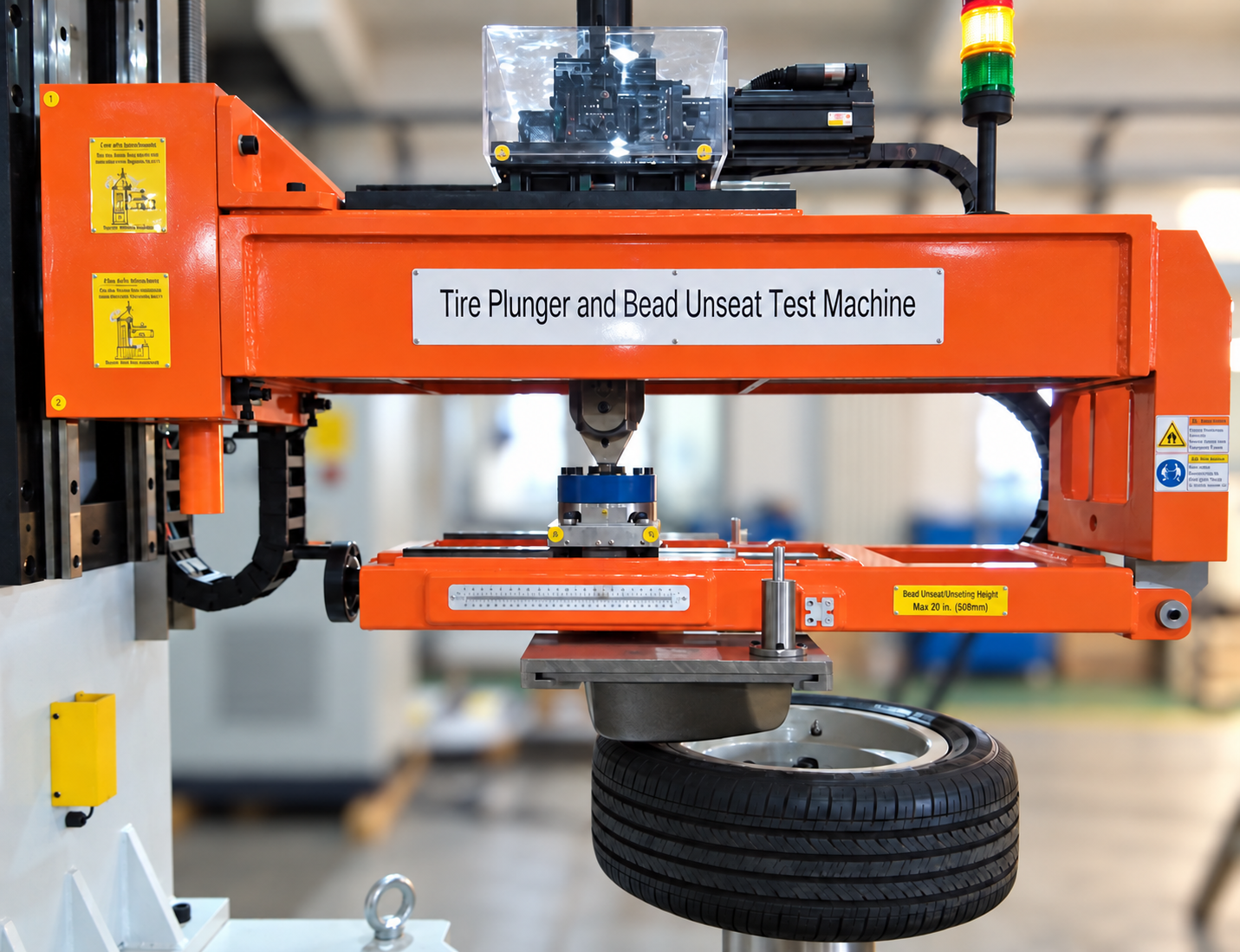
These checks depend on the tire and applicable standard. Equipment model and rim diameter provide an initial screen; a full suitability assessment must return to the specific test task.
05Endurance testing: the criteria for chunking matter
Another issue identified for discussion is how chunking is treated in tire endurance testing.
In the 2019 review, industry stakeholders questioned whether tread chunking should be a failure condition. NHTSA identified potential safety concerns, including wheel imbalance and vehicle vibration, and sought further data.[2]
Within its applicable scope, FMVSS 139 S6.3.2 sets performance requirements for tires after the specified endurance test, including no visible evidence of chunking or the other listed damage conditions. FMVSS 139 S3 defines chunking as pieces breaking away from the tread or sidewall. Any future change must be assessed against the final published rule.[3]
The discussion highlights that safety testing depends both on how conditions are applied and on how observed damage relates to safety risk and acceptance criteria.
Records of conditions, damage locations, photographs and inspection findings help teams review a result consistently. Compliance decisions must follow the applicable requirements; R&D teams can also examine the damage location, test conditions and tire construction for design improvement.
06What should tire laboratories do?
For manufacturers and testing laboratories, the review is an opportunity to map products, methods and equipment capabilities.
Define the product range. Establish which tire types and sizes existing equipment covers, and whether new products change mounting, plunger travel or block contact needs.
Define the method. Different markets, product categories and test purposes may involve different requirements. Check the rim, block, loading conditions and acceptance criteria against the applicable method.
Check equipment and data capability. Installation clearance and loading range determine whether a test can be performed; measurement and calibration affect result quality; process records support review and R&D analysis.
These checks help identify which tasks existing equipment can support, where a new tire size may require a fixture or configuration change, and where other tests are needed to address a separate question.
The regulatory review remains at an early stage. Laboratories should continue to apply current requirements while assessing equipment suitability for new tires. If a rule changes, evaluate its impact against the final text, effective dates and specific product scope.
07Configure the system around the test task
For different tire sizes and target test methods, laboratories need to translate test requirements into equipment configurations. This includes checking the plunger and travel for strength testing, as well as the block, mounting clearance and loading path for bead unseating resistance. Laboratories performing both tests should also consider the compatibility and changeover of the relevant fixtures within the system.
For these applications, Tianjin Jiurong Industry Tech Co., Ltd. (JiuRong Industrial) offers a PCR Strength & Bead Unseating Test System for passenger-car tire strength and bead unseating resistance tests. For certain light-truck tire applications, the configuration can be tailored to the tire size and target method. Depending on the test requirements, the system can include plunger loading, tire positioning, test control and data acquisition. Fixtures, loading travel and control programs can be specified to suit the project.
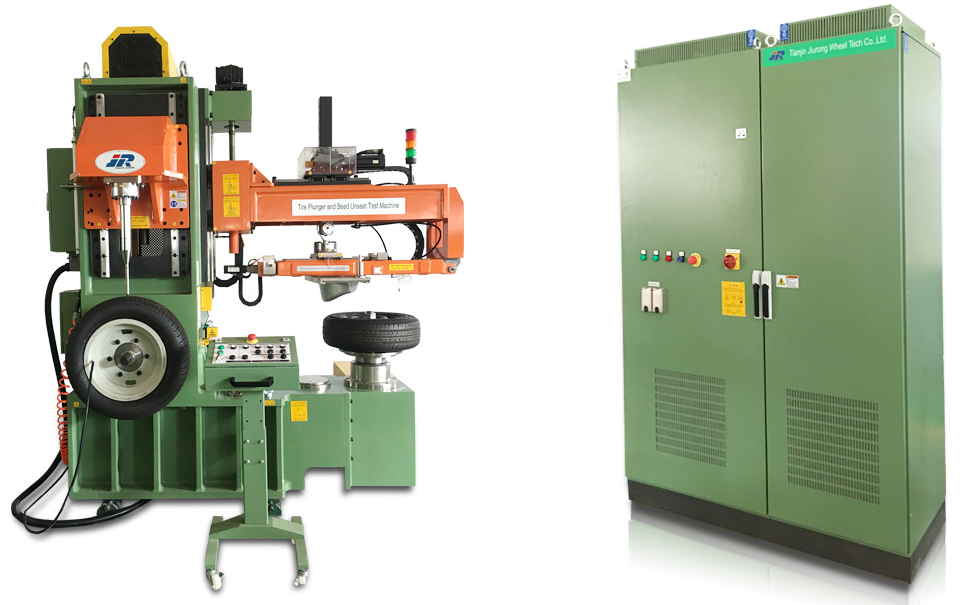
PCR Strength & Bead Unseating Test System
Explore equipment configurations for tire strength and bead unseating resistance testing.
Explore the product →Organizations developing new tire sizes, expanding test coverage or planning laboratory capacity can discuss system configuration using the tire type, size, target standard and existing equipment as a starting point.
Mapping tire specifications, test methods and equipment capability turns a regulatory discussion into practical laboratory validation.
References
- Federal Register: Tire Safety Negotiated Rulemaking Committee notice, Document 2026-21889, 91 FR 67647, Docket NHTSA-2026-1717, October 27, 2026
- Federal Register: Federal Motor Vehicle Safety Standards; Tires, ANPRM, Document 2019-27209, 84 FR 69698, December 19, 2019
- eCFR: 49 CFR § 571.139, FMVSS 139, S3, S6.3 and S6.6
- eCFR: 49 CFR § 571.109, FMVSS 109, S4.2.2.4, S5.2 and S5.3
- ASTM International: F2663-26 standard listing and version information
- eCFR: 49 CFR § 571.119, FMVSS 119, S3, S7.2 and S7.3

